Grow Back Augusta
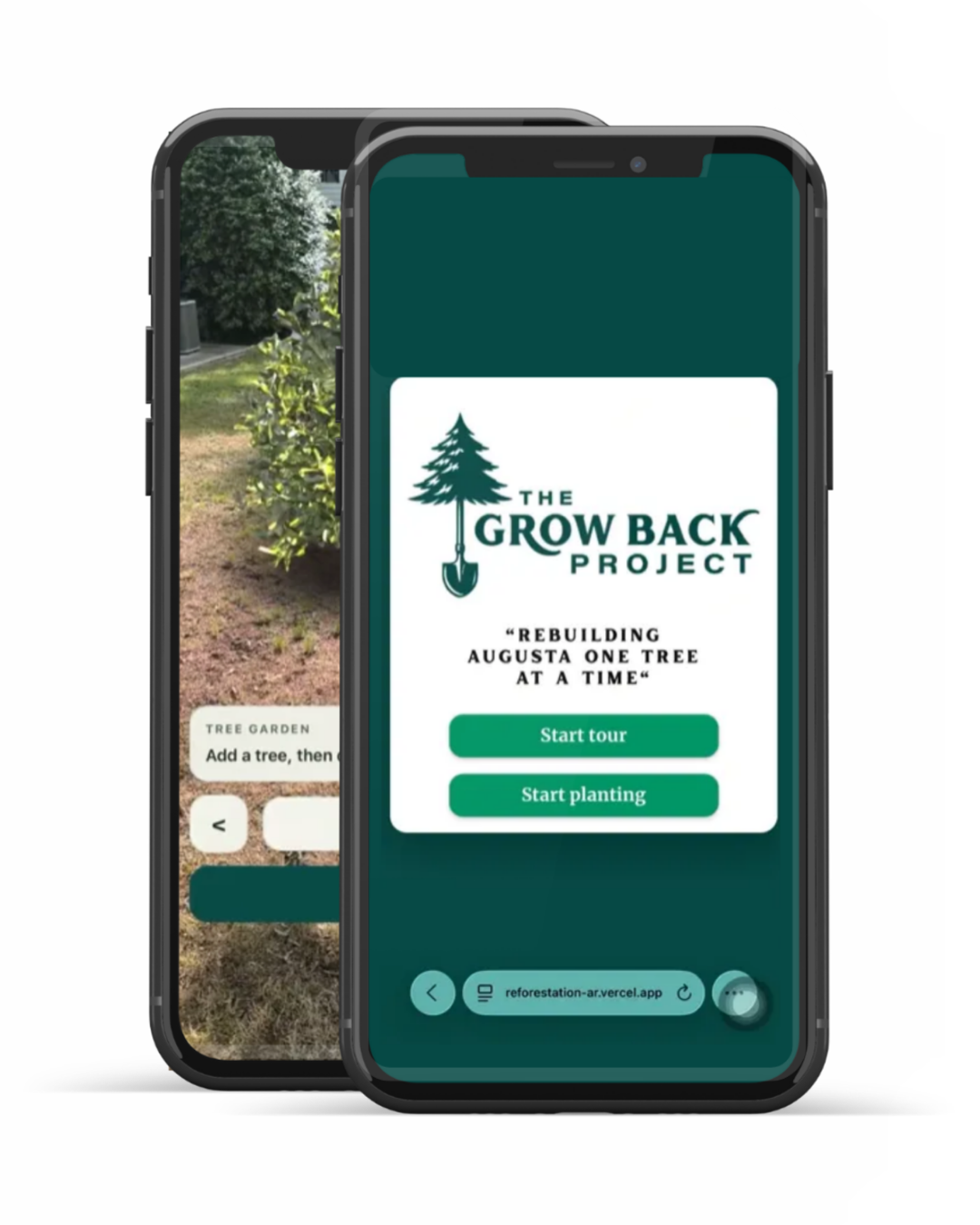
A web-based mobile application created to help Augusta homeowners reimagine and rebuild their backyards after the destruction of Hurricane Helene. Users can just point their phone to an empty spot on their land and see their dream backyard come to life. Designed for the UGA Archway Partnership as a final Capstone for The New Media Certificate.
My Role
Co-Designer
Date
Spring 2026
My Team
Reagan Brode (PM)
Kevin Huynh (Co-Dev)
Tyler Nevin (Co-Dev)
Safa Ali (Co-Designer)
Tools
Figma, Blender, Vite React, WebXR, AR.js, Needle Engine, Blender, and Polycam
A way to rebuild Augusta, one tree at a time.
Problem
In late 2024, South Georgia was hit hard by Hurricane Helene, a Category 4 hurricane that destroyed much of the area’s vegetation and forestation. Many Augusta residents were left with severely damaged landscapes, making it difficult to envision how to rebuild their outdoor spaces.
Between tree ordinances, insurance policies, and even basic botany knowledge, reforestation can seem a daunting task to someone just trying to relandscape their yard. The Grow Back Augusta Project was created to bridge that gap by providing an intuitive, accessible tool that could help users preview landscaping options directly on their property.
Background
To understand our mission with this project, you have to understand our “why”. The images below are sourced from some of the many Augusta residents who had their yards completely destroyed by Hurricane Helene. Their once lush and vibrant backyards have been reduced to debris and uprooted trees.
Put yourself in the homeowners’ shoes. You’re devastated by the destruction of Hurricane Helene, and don’t know where to begin again. How can you confidently make plans to rebuild your backyard before ever putting a shovel to earth?
For Augusta Homeowners, the UGA Archway Partnership created the Grow Back Augusta project, and chose our team to create their augmented reality application. We developed it with three key goals in mind.
GROW BACK AUGUSTA GOALS
1 - Allow homeowners to easily visualize trees in their backyards
2 - User friendly for homeowners of all backgrounds and levels of comfort with technology
3 - Website-based to avoid the app fatigue of today
O1 Research
01.1 Planning
Goal & Audience
Our goal was to gain an understanding of the needs and difficulties Augusta homeowners were facing after hurricane damage. By implementing methods such as competitive analysis, interviewing, and field research, my team and I were able to familiarize ourselves with both the past and future struggles the users may face.
Research Objectives
1 - Explore existing AR Reforestation products and their user experience design
2 - Understand the impact of the Hurricane on Augusta residents, and understand the needs of our target users.
3 - Collect 3d tree models for project using poly-scan technology
Research Methods
Competitive Analysis: I led our competitive analysis from a UX perspective and explored the designs of existing augmented reality applications such as Green Schoolyards and WWF Forest.
Interviews: Dr. Thomas Mote and Dr. Jennifer Mote, two Augusta homeowners, were interviewed. Both suffered property and tree damage from Hurricane Helene. I designed survey questions to span topics about augmented reality and reforestation efforts.
Field Research: By utilizing the process of dogfooding, our team of developers collected 3D models and scans of trees in the real world by using poly-scan technology.
Competitive Analysis
Both the development and design teams conducted separate competitive analyses. By exploring existing applications (Green Schoolyards, WWF Forests), I identified familiar features users would expect and would be necessary in our application. I also saved inspiration frames in Figma to guide our team’s brainstorming.
Meanwhile, the development team researched existing web-based AR tools and identifying limitations, particularly with iOS compatibility.
01.2 Process
Wireframes from Existing AR Applications, Snapshot from Green Schoolyards
Field Research
Developers collected 3D models and scans of trees in the real world by using poly-scan technology.
Developers Kevin Huynh and Tyler Nevin
Interviews
Thomas and Jennifer Mote were interviewed separately, with questions focusing both on their experiences as Augusta Homeowners and their familiarity with AR technology. Interview questions were designed to give us key insight, and we found:
The hurricane left people without power for multiple days.
Users prioritize shade and branch falling dangers important features to have.
Users believe reforestation after tree depletion is necessary.
Most users would need a tutorial on how to use and navigate an AR application.
Interview Questions and Findings
02 Empathize
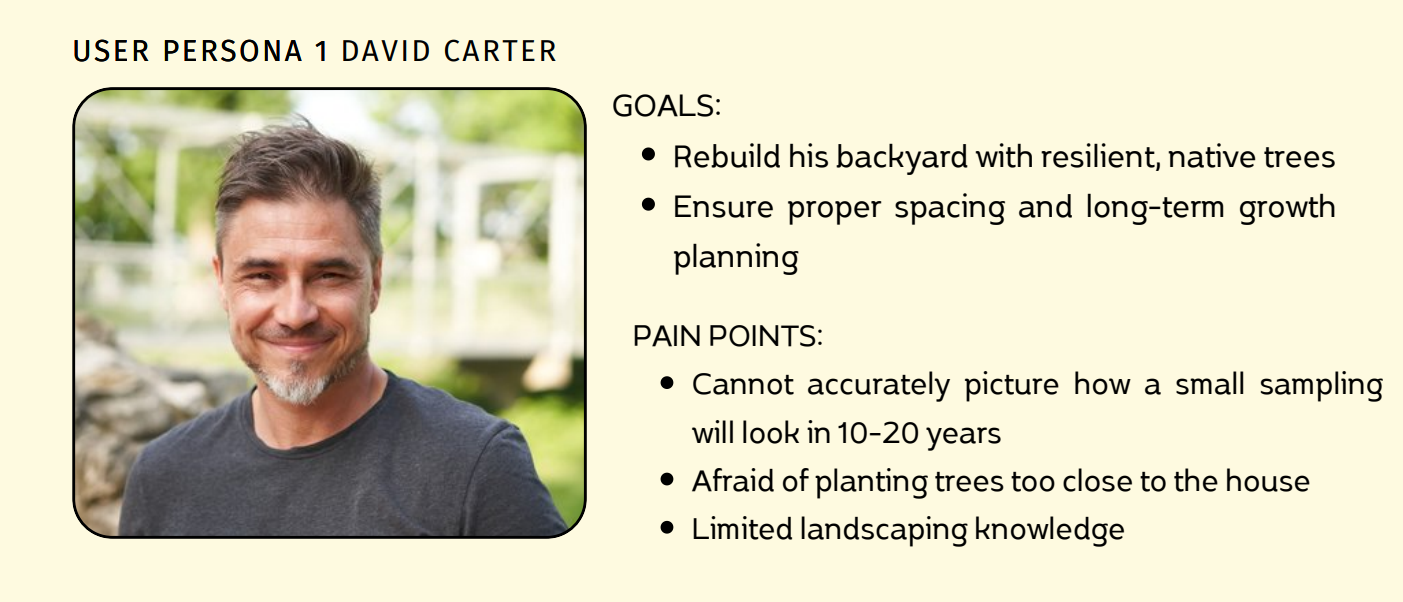
Taking the insights we gathered from our research, I created two user personas to represent the Augusta homeowners that would be using our product.
The first, Maria Oh, includes a biography to better empathize with the user. The second, David Carter, was designed for easy scannability to best inform the dev-team.
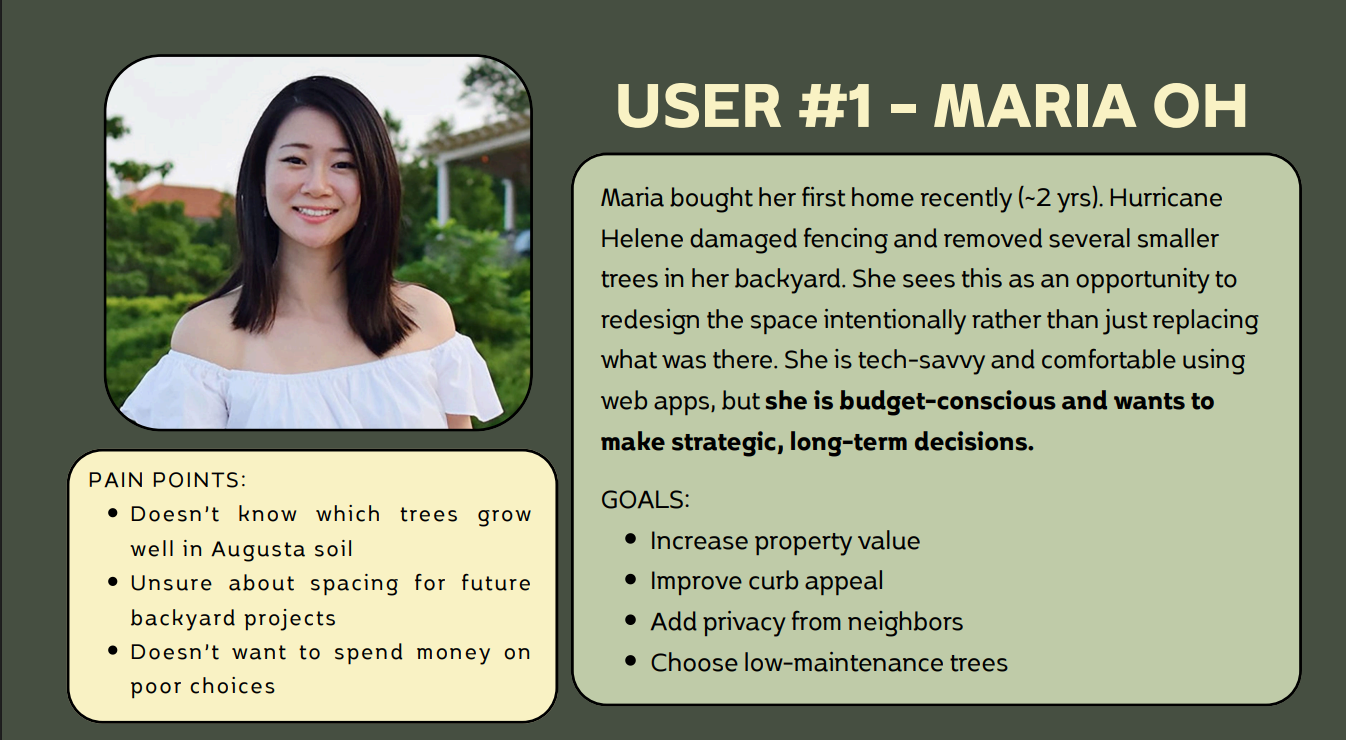
My Personas: Meet Maria and David!
Help homeowners confidently make plans to rebuild their backyard before they ever put a shovel to earth?
HOW MIGHT WE?…
03 Ideate
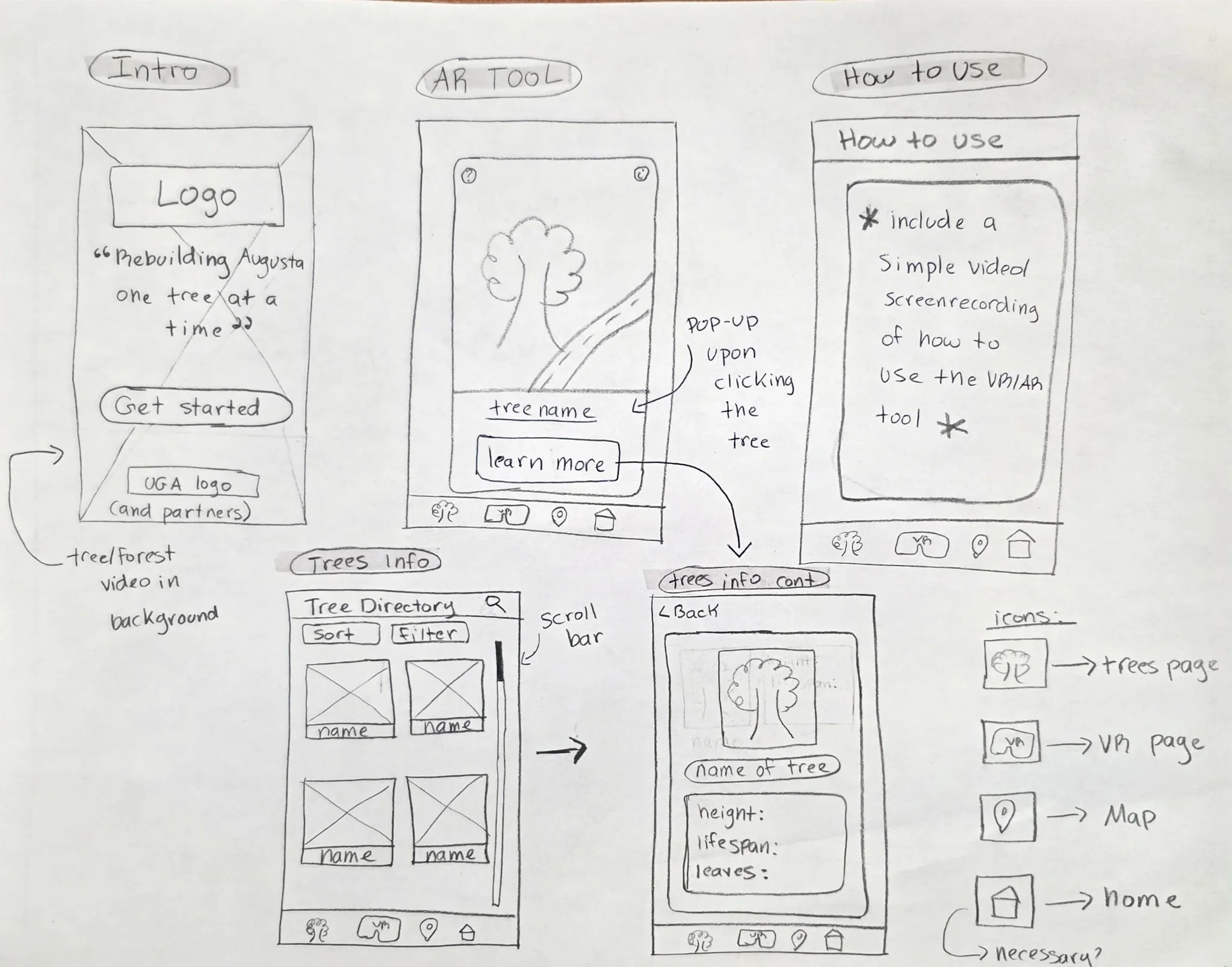
Low Fidelity Wireframes
My co-designer and I began the ideation process by creating separate wireframes for Grow Back Augusta. We then combined our favorite elements into a final design. Throughout the process, our goal was simplicity and ease of use.
We focused on clearly introducing the app, keeping the interface simple with as few screens as possible, and incorporating the project's key features, like tree information and the AR feature. I chose a card-based layout because it's a popular style, familiar to users, and easy to scan. This would allow for homeowners of varying levels of comfort with technology and AR to feel confident using our product.
We then translated our paper wireframes to low-fidelity versions in Figma, to clarify user flows and demonstrate to the dev-team what we envisioned.
My Initial Wireframes, Safa Ali’s Paper Wireframes
Our Combined Wireframes, from Paper to Figma
DESIGNING KEY FEATURES:
We created a prototype from our initial wireframes to show the dev-team what we envisioned.
I worked on simplifying navigation and improving usability. I introduced a visual tree catalog that allows users to browse and select species more efficiently, replacing the need to toggle through options one by one.
Each tree also includes an information page with key details like species type, size, and growing conditions, supporting more informed decision-making.
Dev-Team Ideation
As we worked on designing the application, the development cleaned up 3-D models they scanned during our research phase and began programming in React. For more information about this process please read my teammate, Kevin Huynh’s Medium article here!
3d Model of Tree in Blender
04 Prototype
Branding
The UGA Archway Partnership established a set style guide that I worked into our final designs for the AR application.
By incorporating branding elements from the Grow Back Project, I created a cohesive visual identity that reflected the environmental focus of the application.
UGA Archway Partnership’s Given Style Guide
Grow Back Augusta Final Prototype Wireframes
Final Product
The development team translated our designs into a live mobile-application, giving homeowners the tools to reimagine their yards at just the touch of a button. Download and view the full prototype demo HERE.
Kevin Huynh Testing the Product
05 Presentations
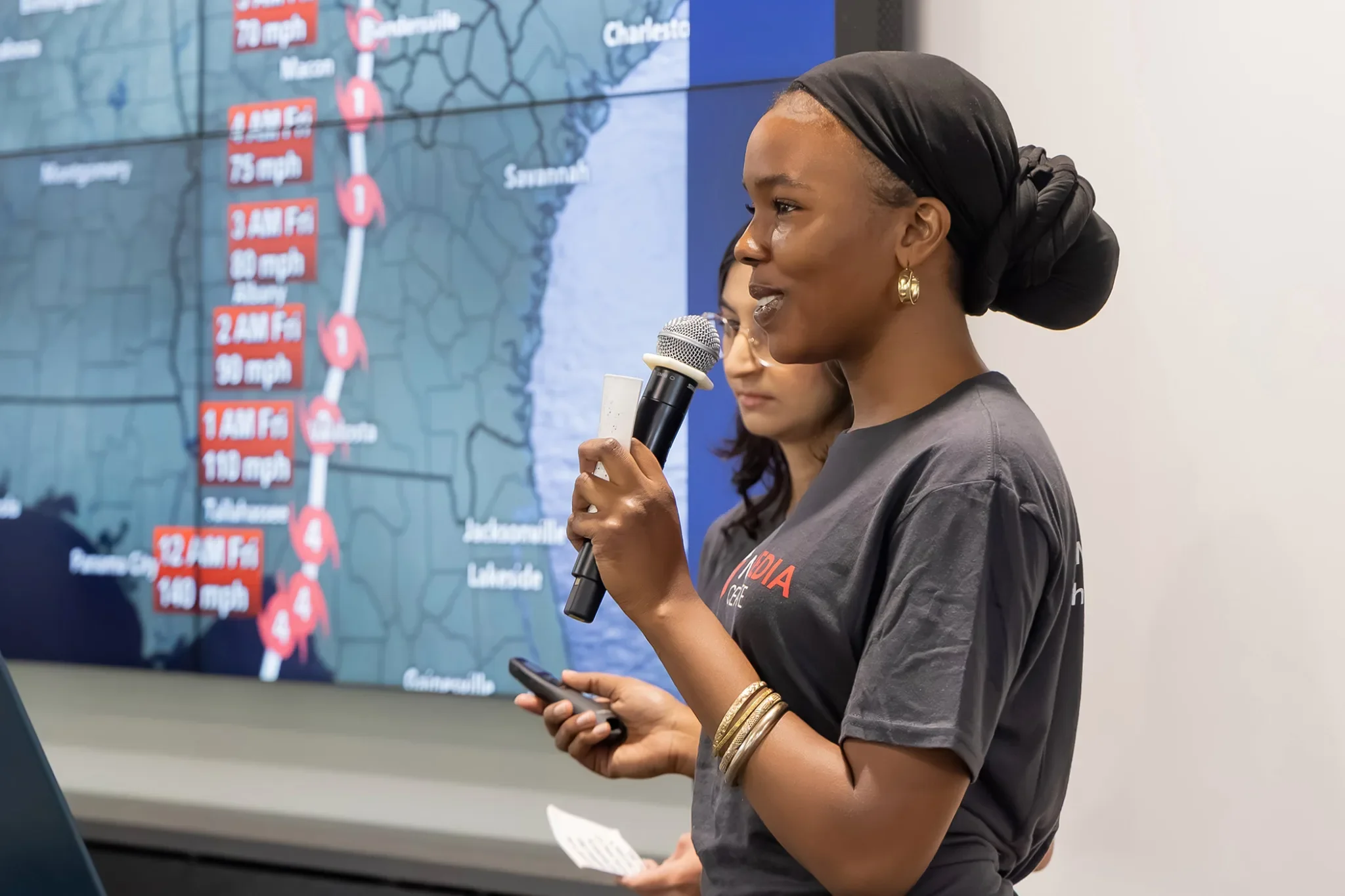
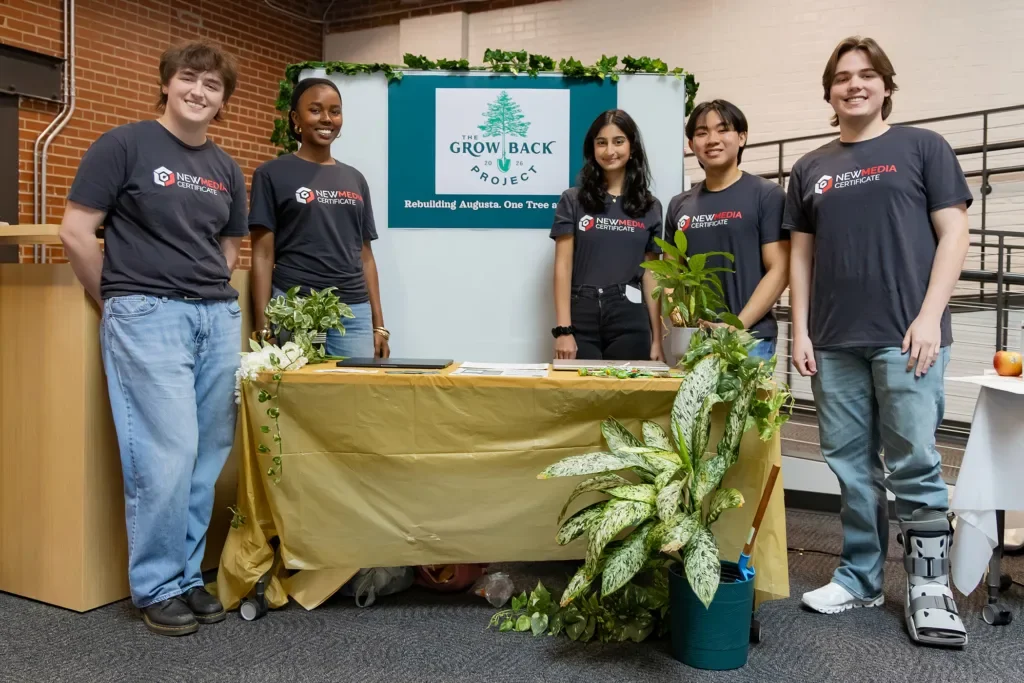
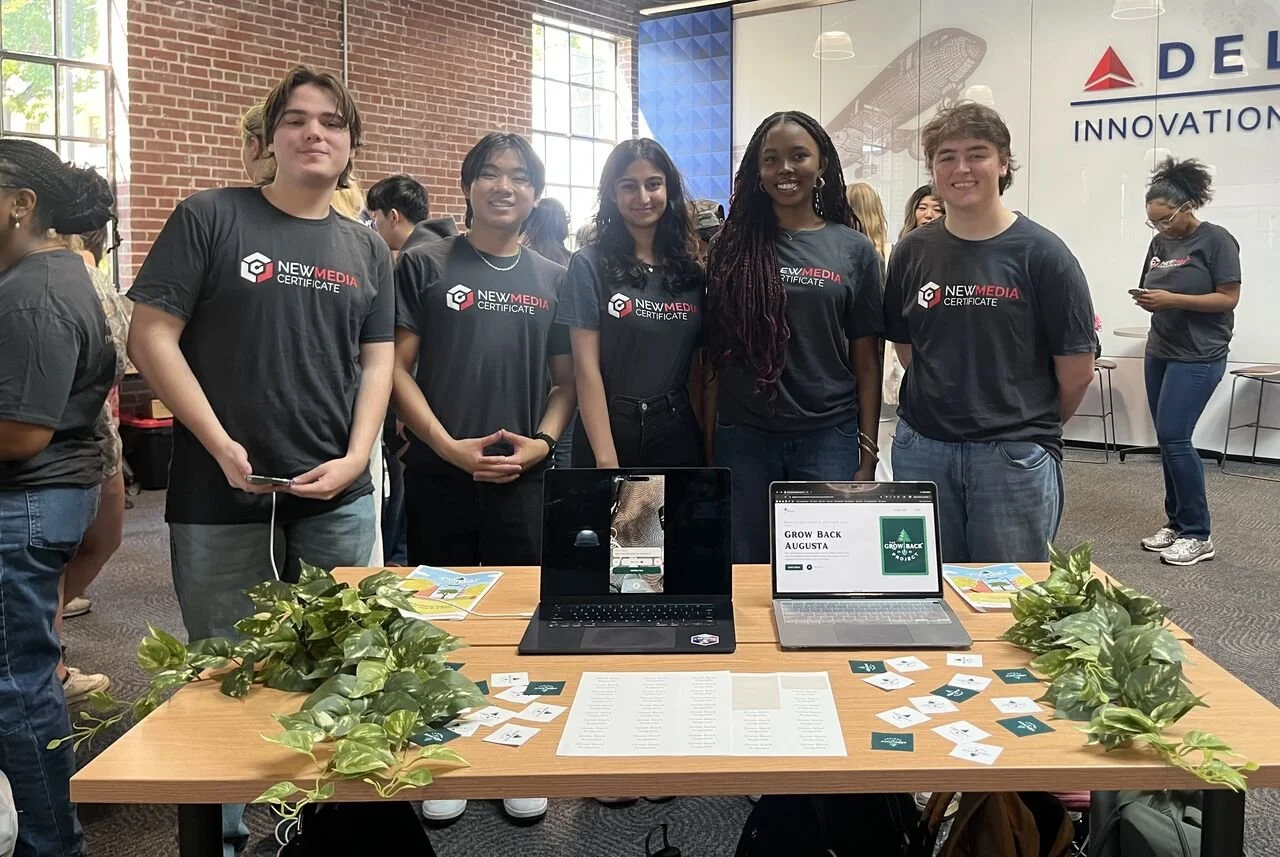
The Grow Back Augusta team and I presented our project at the New Media Institute's Demo Day and later to 80+ industry professionals at the New Media Institute SLAM Exposition.
I opened the presentation, and guided the audience through our journey from research to final prototype, highlighting how our mission, user insights, and design principles informed every decision. It was a great opportunity to communicate not just what we built, but why we built it that way!
Our team was also honored to be featured in a UGA article covering our work. You can read it here!
Learning and Takeaways
The final product successfully delivers an accessible, web-based AR experience that supports both basic and advanced functionality. By offering multiple interaction modes, the app accommodates a wider range of devices and user needs.
This project strengthened my ability and interest in designing for emerging technologies, while considering real world constraints like performance and accessibility. As I finish up my time at the New Media Institute, I’m truly grateful to have left a lasting impact with such an important project.
-
![]()
Me Presenting at the NMI's SLAM Expo
-
![]()
The Grow Back Augusta Team at NMI's SLAM Expo
-
![]()
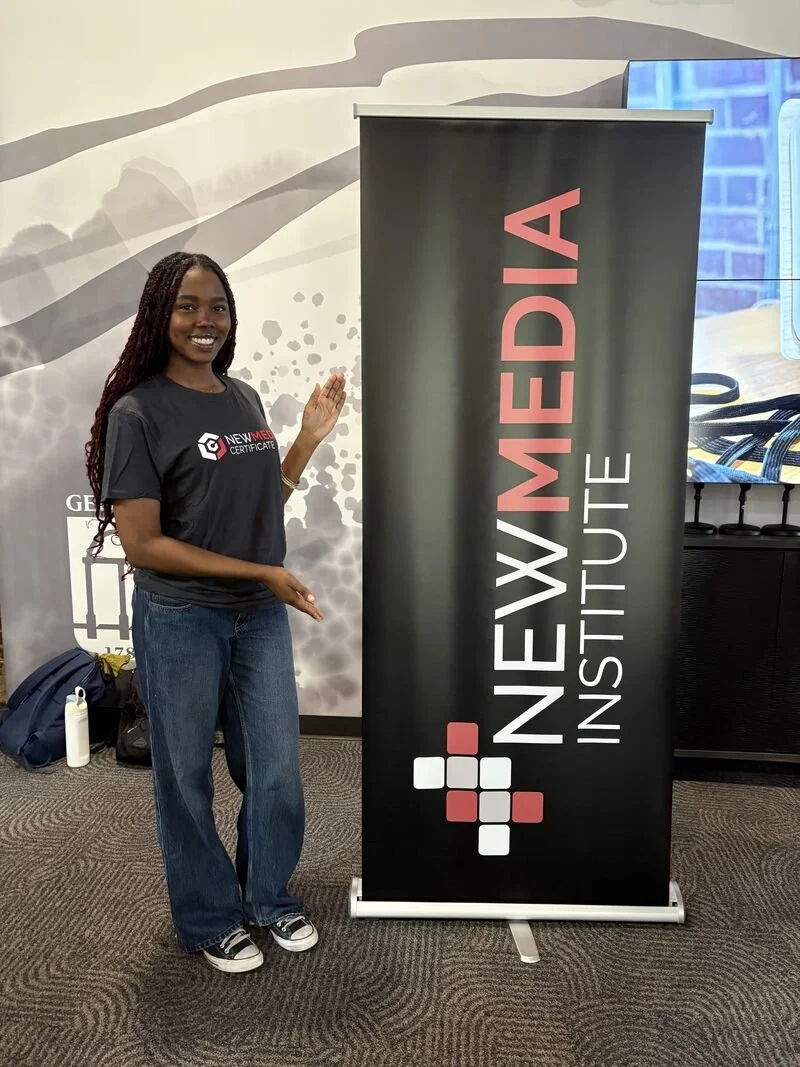
NMI's Demo Day
-
![]()
The Grow Back Augusta Team at NMI's Demo Day
Next Project…